


OTTAWA – Canada launched an updated framework for national security with a call to prepare for all emergencies, including the possibility of war.
The new strategy, which replaced one drafted more than 20 years earlier, puts economic security at the core of the plan.
“It’s not enough to fuel, feed and defend ourselves,” Prime Minister Mark Carney said Thursday from Montreal, where he was hosting the Canada-EU Summit.
“Sovereignty now requires secure access to semiconductors, critical minerals, payment systems, clean energy technology, vaccines, space-based communications and artificial intelligence.”
The warning of possible war leapt from page five of the 13-page document titled “The Plan for a Stronger Canada.” It stated that Canada will “prepare for all contingencies up to and including war and other worst-case scenarios. “
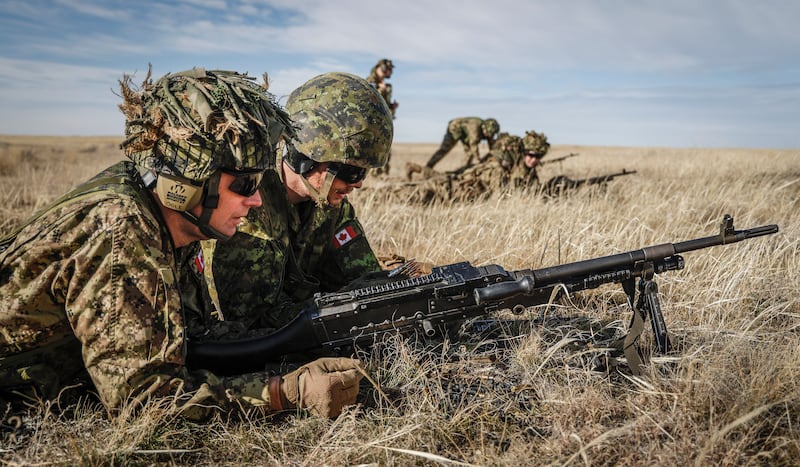
“We do think it is high time that all of Canada, Canadian businesses and Canadian academics are more aware of the external threat environment and that we as a country are more prepared for the threats that Canada faces,” one senior government official said during a background briefing with reporters.
The release of the plan comes as the trade war with the United States deepens. Since re-entering the White House, U.S. President, Donald Trump has persistently vilified Canada and threatened to turn it into the 51st state.
In a recent interview with The New York Times, Carney said he studied the “extreme tail risk” of U.S. military action against Canada.
Wesley Wark, a senior fellow at the Centre for International Governance Innovation, said the document’s wording, while triggering a recall to the prime minister’s interview, is more likely intended to raise awareness that Canada can be pulled into a conflict overseas.
“I think the statement in the strategy is really a confirmation that Canada aligns with its NATO partners in taking seriously the prospect that there could be a war involving NATO as an outcome of Russian aggression,” he said.
Wark said war could take the form of a conventional attack or hybrid warfare, the latter of which blends military force with cyberattacks, disinformation and economic pressure.
More than 2,000 Canadian Armed Forces members are currently deployed in Latvia.
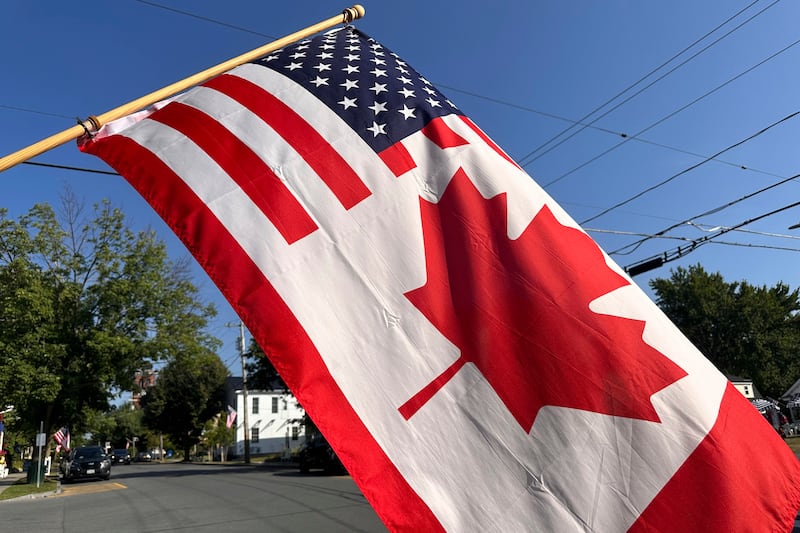
U.S. only other country mentioned in document
The strategy also called for revised foreign policy that builds “a new partnership with the United States.”
The U.S. is the only country mentioned by name, although the document called for building resilience through diversifying economic and security ties around the world. It called Europe a “long standing and like-minded partner,” and stated a willingness to work with Indo-Pacific nations that commit to resolving disputes through diplomacy and fair economic co-operation.
Although it’s not explicitly stated, Wark said “it’s clear that the message is around reducing Canada’s dependence on unreliable allies like the United States.”
The government said it will bolster its intelligence gathering capabilities. Canada receives much more intelligence than it collects, and that’s a problem, national security analyst Stephanie Carvin said.
Carvin, a researcher with Carleton’s Norman Paterson School of International Affairs, said Canada primarily gets intelligence through its Five-Eyes allies in the U.S., United Kingdom, Australia and New Zealand.
“We’ve been successfully doing that for a number of years. But what it means is that the intelligence that is collected is primarily serving American interests first, or British interest first. It may not be collected with Canadian interests in mind.”
Government officials said they would look to new technology but did not rule out the possibility of creating an agency of Canadian spies who work overseas, modelled after the U.S.-based CIA or the U.K.’s MI6.
Carvin said a new agency may not be necessary in the era of AI and biometrics.
“These agencies make less sense than it did in the past because individuals are much easier to detect as they go across state lines. The problem is in not adapting or procuring (new technology) fast enough.”
Key changes to security strategy
The previous strategy, drafted more than 20 years ago, did not lay out a plan for economic security. This plan prioritized protecting the economy by calling for the safeguarding of eight key sectors, which include:
- Emerging technologies (AI, Quantum)
- Critical minerals
- Defence
- Energy
- Transportation
- Pharmaceuticals and biotech
- Food security
- Financial transactions (payments, settlements and investments)
Carrying out the strategy will involve new legislation and more funding in five areas: economic security, foreign relations, defence, public safety and intelligence.
There will also be a first ministers’ meeting focused on national security.
More details will be rolled out over the next few months through different departments. Officials say they see the “rupture in the world order,” and that the updated strategy will determine how the federal government will chart a course through it.

