OTTAWA — Canadian exports to China surged by roughly 40 per cent in the first nine months of this year — an increase the federal government says far outpaces growth in exports to anywhere else.
Much of that increase has happened since January, when Prime Minister Mark Carney made his first visit to China. The trip was part of the prime minister’s campaign to overcome political tensions with Beijing and tear down trade barriers that had been erected between the two countries.
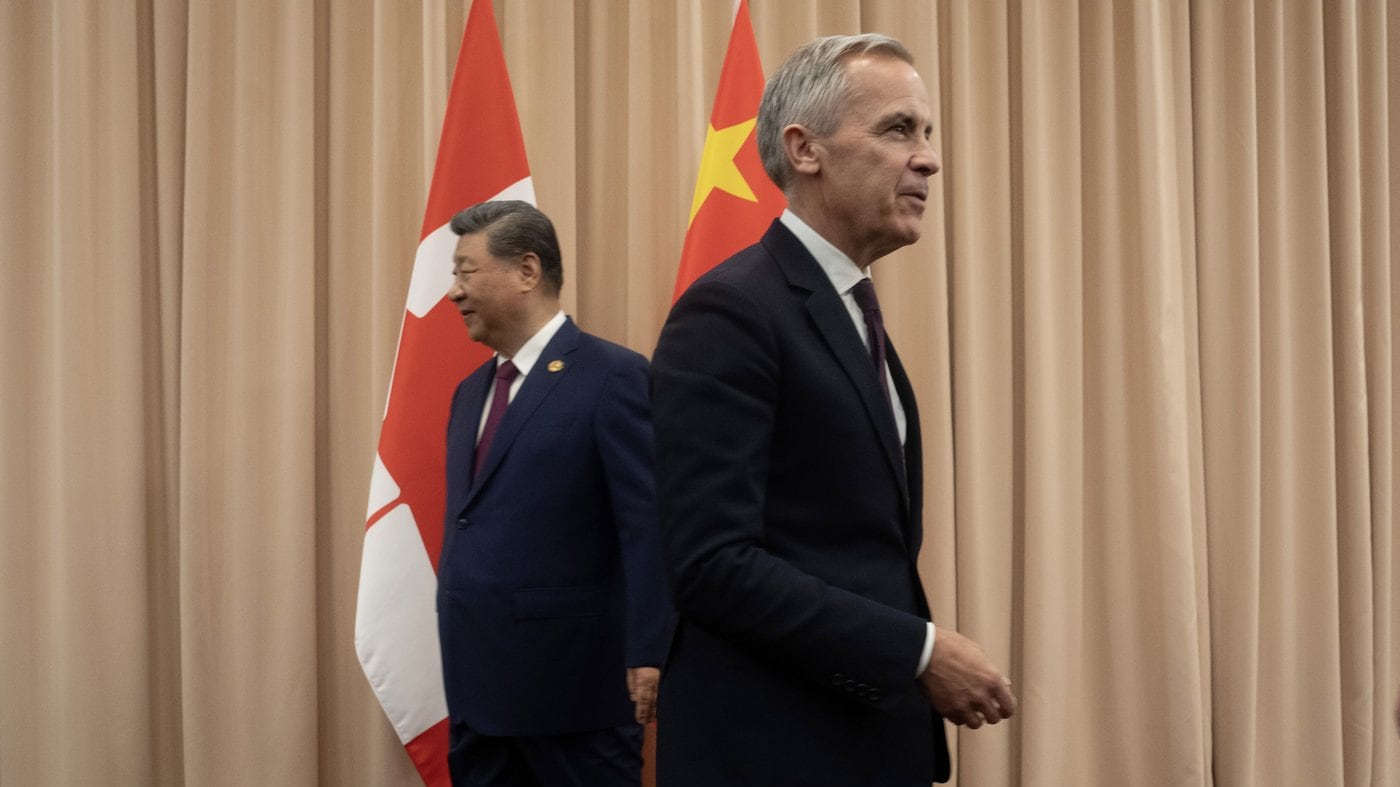
Carney will be back in China this week for the APEC summit in Shenzhen. He’s expected to meet privately with President Xi Jinping during the visit.
Statistics Canada data shows Canada’s exports to China reached $33.5 billion in the first three quarters of this year, an increase of $9.5 billion or almost 40 per cent over the same time period last year.
China’s exports to Canada remained relatively flat by comparison. Between January and September of this year, Canada imported $68.8 billion in Chinese goods, compared with $68.1 billion in the same period a year earlier.
Canada’s total exports to China reached $35 billion in 2025, while imports totalled around $90 billion.
Mujtaba Hussain, a spokesperson for International Trade Minister Maninder Sidhu, said that figure represents a rate of growth roughly four times faster than growth rates for exports to all other countries.
“That growth reflects the work Minister Sidhu and our government have done to create a stable, predictable trading relationship with China,” said Hussain.
Beijing and Ottawa announced earlier this month they’re extending a January agreement to provide Chinese market access to Canadian imports in exchange for Canadian market access for Chinese steel and aluminum.
In March, China dropped tariffs on Canadian canola meal, peas, lobster and crab. Canada agreed in return to allow in certain Chinese steel and aluminum products.
The deal was negotiated in January by Carney and Xi in Beijing but initially had been set to expire at the end of this year.
Sidhu said last week the deal is being extended by two years, to the end of 2028.
Hussain said exports of canola seed and meal, beef and peas to China have reached nearly $3.5 billion this year, an increase of nearly $1.6 billion, or 82 per cent.
Canadian beef exports have reached $377 million, he said -- nearly double what Canada exported in all of 2021.
Hussain also said Canadian crude oil exports to China have more than doubled to $9.5 billion, and exports of minerals and fertilizer continue to grow.
“Minister Sidhu is focused on increasing our exports to China by 50 per cent by 2030,” said Hussain. “That is how we will support Canadian businesses and workers.
“We will keep pushing for greater and more predictable access to the Chinese market so that more Canadian businesses can grow and create good-paying jobs here at home.”
Vina Nadjibulla, co-founder and CEO of the Centre for Strategic Statecraft, said the increase in energy exports is related to the Trans Mountain pipeline expansion being fully operational.
“We’re seeing Canada exporting a lot more of our energy resources to Asia, and China is a huge market,” said Nadjibulla.
Nadjibulla said that while the increase in exports as imports remain steady is positive news, it’s important for Canada not to become overly dependent on China for any particular export.
“This is particularly relevant for canola,” she said. “We are already exporting about two-thirds of our canola seed exports to China. That kind of strategic concentration opens us up to leverage and potential coercion from China.
“While we deepen economic engagement with China, we have to avoid strategic dependence and we have to make sure that we strengthen economic security too here at home.”
Nadjibulla said she will be watching for news on Chinese investments, including in manufacturing and the auto sector.
Carney’s is visiting China’s tech hub of Shenzhen for the Asia-Pacific Economic Co-operation summit, set for Nov. 18 and 19. Leaders from across the Pacific Rim will gather in the city bordering Hong Kong to take stock of an increasingly disordered trading system.
Xi and Carney are set to meet Tuesday and Carney will address business leaders the next day.
This report by The Canadian Press was first published Nov. 16, 2026.
With files from Dylan Robertson
Catherine Morrison, The Canadian Press

